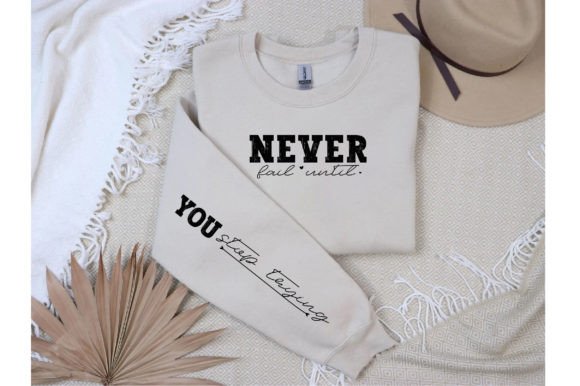
Reviewing Never Fail Until You Stop Trying Sleeve
As a designer who has spent countless hours staring at digitizing software and troubleshooting thread breaks, I approach every new machine embroidery design with a mix of curiosity and caution. We have all been there: you find a graphic that looks stunning on screen, only to realize it turns into a tangled mess of bird nests once it hits the fabric. That is why I took a close look at Never Fail Until You Stop Trying Sleeve, not just as a digital asset, but as a potential centerpiece for real-world projects.
This piece falls under the category of T-Shirt Designs and general Graphics, but its application goes far beyond simple apparel. The phrase itself carries weight. It is motivational without being cliché, offering a grounded perspective on persistence. For those of us running a craft business or selling on platforms like Etsy, finding designs that resonate emotionally with buyers is half the battle. The other half is ensuring the technical execution matches the sentiment.
First Impressions and Visual Personality
When I first loaded the file to preview it, the layout struck me as balanced. The typography appears clean, which is crucial for readability in embroidery. Unlike overly ornate scripts that can lose their shape when scaled down, this design seems to prioritize clarity. The mood is professional yet approachable, making it suitable for a wide range of demographics. It does not scream for attention; instead, it invites the viewer to read and reflect.
For an Etsy seller or small shop owner, visual appeal translates directly to perceived value. A muddy or poorly spaced design can make a handmade item look amateurish. Never Fail Until You Stop Trying Sleeve maintains a level of sophistication that suggests quality. Whether you are creating a personalized gift for a graduate or stocking inventory for a boutique, the aesthetic fits seamlessly into modern, minimalist trends.
Real-World Application: The Sweatshirt Test
To truly evaluate this design, I imagined a specific scenario: a custom order for a local college student needing a unique sweatshirt embroidery piece for finals week. The client wanted something subtle but meaningful. This design fit the brief perfectly. However, placing text on a sleeve presents unique challenges compared to a chest or back placement.
Sleeves are curved, narrow, and often subject to more movement and friction than other parts of a garment. When using this design for custom apparel, particularly on sleeves, you must consider the hoop size carefully. If the design is too wide, it may distort around the arm’s circumference. I recommend testing the scale on a scrap piece of similar fabric to ensure the letters remain legible and do not warp. The stitch density plays a critical role here. Too dense, and the fabric will pucker; too light, and the underlying shirt color might show through, reducing contrast.
Versatility Beyond Apparel
While the product description highlights its use for T-shirts and sweatshirts, I see significant potential in other areas. Imagine this quote embroidered on a sturdy canvas tote bag design. The durability of a tote combined with an inspirational message creates a functional accessory that customers can use daily. It also works well for embroidered patch creations. Patches allow for greater control over stabilizer usage and can be applied to various items later, adding versatility to your design assets.
For those focusing on home goods, consider a pillow cover or a high-quality kitchen towel. The motivational aspect translates well to spaces where people work or study. However, always check the fabric texture. A rough linen might require a different stitch type, such as a fill stitch rather than a satin stitch, to ensure coverage and prevent snagging. If the design includes fine details, verify if they translate well to textured surfaces before committing to a final finished product.
Technical Considerations for Embroiderers
Before running this digital embroidery file on your machine, there are several practical steps to take. First, always check the recommended hoop size. If the design is large, you may need a multi-position hoop or a larger frame, especially for sleeve applications. Second, inspect the stitch types used. A mix of running stitch for outlines and satin or fill stitches for body text is common, but each behaves differently on various fabrics.
Stabilizer choice is non-negotiable. For stretchy fabrics like jersey knits used in t-shirts, a cut-away stabilizer is usually best to prevent distortion over time. For woven fabrics like cotton tote bags, a tear-away might suffice. Always test on scrap fabric first. This allows you to adjust tension and check for thread breaks without risking your final material.
Color selection also impacts the outcome. High contrast between the thread colors and the fabric ensures readability. If you are stitching on dark fabric, use light threads, and vice versa. Avoid low-contrast combinations unless you are aiming for a subtle, tonal effect. Additionally, review the design in black and white mockups to identify any potential clarity issues that color might mask.
Commercial Viability and Brand Consistency
For commercial embroidery projects, consistency is key. If you are building a brand around motivational wear, Never Fail Until You Stop Trying Sleeve aligns well with themes of resilience and growth. It enhances brand consistency by offering a cohesive message across different products. Customers trust brands that deliver clear, high-quality messaging.
However, always confirm licensing terms before selling. While many designs come with commercial use rights, it is essential to read the specific license included with your purchase. Ensure you are allowed to sell physical items made with the design. Some licenses restrict the sale of the digital file itself but permit the sale of the handmade product. Clarifying this protects your business and respects the creator’s rights.
Final Verdict
In my evaluation, Never Fail Until You Stop Trying Sleeve stands out as a versatile and meaningful addition to any embroiderer’s library. It bridges the gap between aesthetic appeal and practical application. Whether you are creating baby embroidery for a nursery, holiday embroidery for gifts, or everyday wear for your small shop product line, this design offers flexibility.
Remember, the success of any embroidery project depends on preparation. Test your settings, choose the right stabilizer, and respect the limitations of your fabric. By doing so, you transform a simple graphics file into a tangible, high-value item that resonates with your customers. This design is not just about stitching; it is about conveying a message with precision and care. For designers and makers looking to elevate their offerings, it is a worthy candidate for your next project.